
1. Introduction to the PHPCMS System
PHPCMS is a content management system developed based on PHP + MySQL, primarily used for constructing news and information-based websites. It is renowned for its modular design and excellent scalability, making it suitable for rapidly building various types of portal websites. PHPCMS once gained popularity among many developers and webmasters due to its flexibility and ease of use. However, it was gradually replaced by other CMS systems after the development team ceased updates. Nevertheless, it remains a classic open-source CMS system.
Like other Content Management Systems (CMS), due to its extensive functionality, security vulnerabilities are inevitable. This doesn't imply that the development team lacks competence; rather, vulnerabilities are an unavoidable aspect of any system of even moderate complexity. Even colossal companies like Microsoft continually encounter vulnerabilities.
Next, we will explain how to swiftly address issues related to tamper prevention, hijacking prevention, Webshell prevention, SQL injection prevention, XSS attack prevention, and upload vulnerability prevention in PHPCMS without modifying the program code.
Like other Content Management Systems (CMS), due to its extensive functionality, security vulnerabilities are inevitable. This doesn't imply that the development team lacks competence; rather, vulnerabilities are an unavoidable aspect of any system of even moderate complexity. Even colossal companies like Microsoft continually encounter vulnerabilities.
Next, we will explain how to swiftly address issues related to tamper prevention, hijacking prevention, Webshell prevention, SQL injection prevention, XSS attack prevention, and upload vulnerability prevention in PHPCMS without modifying the program code.
2. PHPCMS Protection Methods
To address the security vulnerability threats in PHPCMS, it is necessary to tackle the issues from multiple aspects, including tamper prevention, SQL injection prevention, Webshell prevention, and XSS attack prevention.
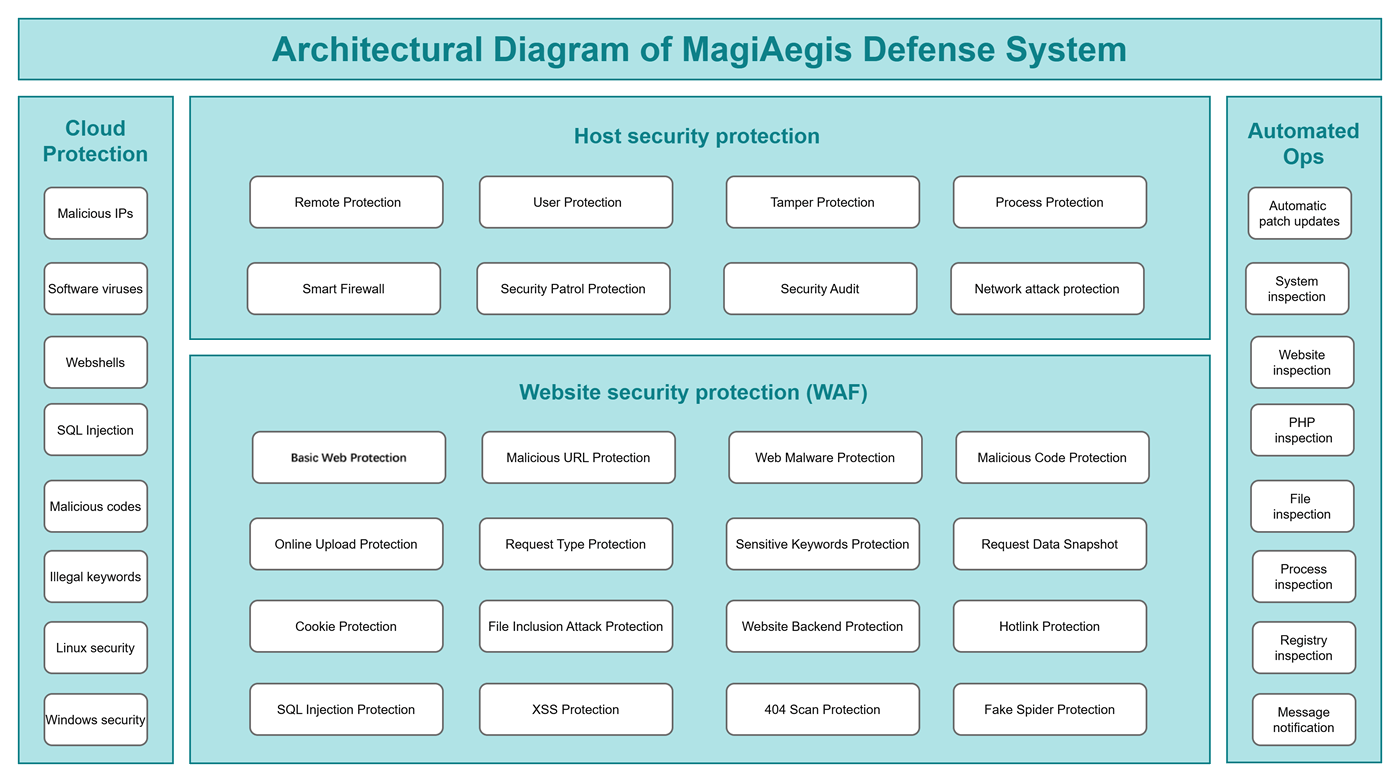
To this end, we need to utilize a new-generation protection software [MagiAegis - Defense System]. This system features a quadruple protection mechanism encompassing "Host Firewall + Web Application Firewall + Cloud Security Protection + Automated Ops" providing a one-stop solution to all security threats.
Firstly, through tamper-proof technology, each file on the website is reinforced with fine-grained protection to prevent hackers from tampering with files or uploading Webshells. Subsequently, by employing a Web Application Firewall (WAF), every access request is authenticated to intercept SQL injection attacks and XSS (Cross-Site Scripting) attacks. Additionally, zero-trust protection is implemented for the website's backend, restricting unauthorized users from accessing it.
Step 1: Install the Defense System
Step 2: Add Protection Policies
To this end, we need to utilize a new-generation protection software [MagiAegis - Defense System]. This system features a quadruple protection mechanism encompassing "Host Firewall + Web Application Firewall + Cloud Security Protection + Automated Ops" providing a one-stop solution to all security threats.
Firstly, through tamper-proof technology, each file on the website is reinforced with fine-grained protection to prevent hackers from tampering with files or uploading Webshells. Subsequently, by employing a Web Application Firewall (WAF), every access request is authenticated to intercept SQL injection attacks and XSS (Cross-Site Scripting) attacks. Additionally, zero-trust protection is implemented for the website's backend, restricting unauthorized users from accessing it.
Step 1: Install the Defense System
For installation instructions, please click here. After installation, please enable the "WAF" module.
Step 2: Add Protection Policies
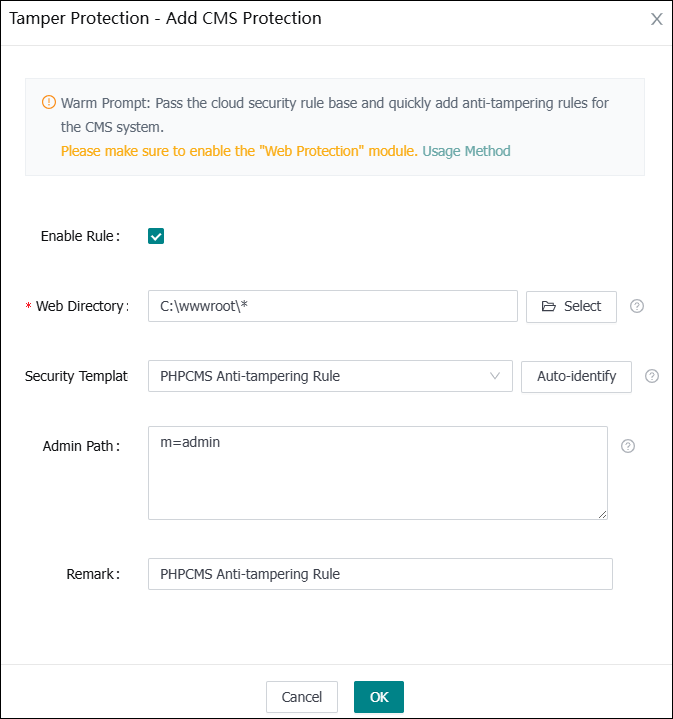
[MagiAegis - Defense System] has built-in security protection rules for most CMS platforms. Please navigate to "Tamper Protection - Add CMS Protection", fill in the "Web Directory and Admin Path", select the "PHPCMS Anti-tampering Rule", and you can immediately activate protection without any side effects.
Congratulations! The configuration of the protection rules is complete.
When accessing the website backend at this point, password verification will be required.
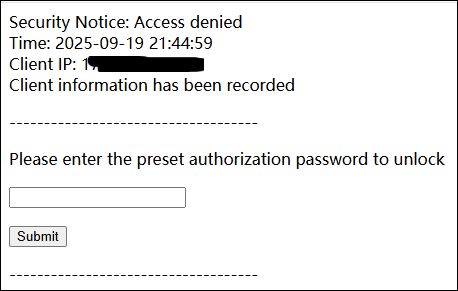
Enter the authorization password you set previously, and you will be granted access.
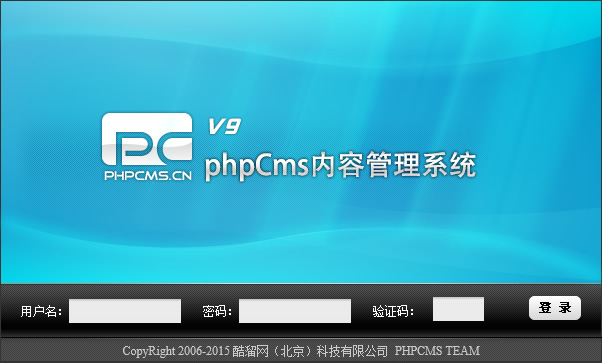
Congratulations! The configuration of the protection rules is complete.
When accessing the website backend at this point, password verification will be required.
Enter the authorization password you set previously, and you will be granted access.
The above are the methods for securing your PHPCMS site. No code modifications are required; you can resolve the issues with just a few mouse clicks. Isn't it incredibly simple?
Next, you can also utilize the [MagiAegis Defense System] to implement additional security protections for your server. For configuration instructions, please click here: https://www.magiaegis.com/supports/defense/104.html